Montlake Lid Bike and Pedestrian Bridge: What's New
August 13, 2026
August 13, 2026
Walk across the Montlake Lid on a weekday morning and you will see a strange mix of habits still catching up to a changed map. Cyclists slow down at the top of the rise because they expect gravel, not the paved 14-foot path that has been there for over a year. Dog walkers pause at the crest as if checking for traffic that no longer runs where they think it does. A few Canada geese have already claimed sections of the lawn, fulfilling what The Urbanist's Ryan Packer guessed might happen when the lid's grass first went in.
The lid is not new news exactly. But the way Montlake residents actually move through their own neighborhood has quietly flipped since it opened, and the routes that felt permanent during five years of construction are not the routes you want anymore. Here is what changed, and where the next round of disruption is headed.
Buses stopped serving the SR 520 and Montlake Boulevard interchange directly in 2019, when the old "Montlake Flyer" stop closed for construction. For half a decade, if you lived on one side of the freeway and worked, shopped, or caught transit on the other, you either drove around or walked a temporary path squeezed along Montlake Boulevard.
That ended in stages, and out of the order you'd expect. A 73-foot-wide bicycle and pedestrian land bridge east of the lid opened to the public in December 2024, linking East Montlake Park on the north side of the freeway to Lake Washington Boulevard on the south, with soil berms planted with nearly 15,000 native plants buffering the highway noise below. The three-acre landscaped lid itself, part of the broader $455.3 million Montlake Project, was completed the following year.
Then in April 2025, King County Metro activated four new bus stops on top of the lid itself, restoring direct service for routes 43, 48, 255, 271, 542, and 556. That is not a small detail. Those routes carry roughly 13,500 riders a day between them, and the stops reconnect Montlake to the Central District, East Capitol Hill, and the Eastside without the workaround transfers riders had been making since 2019.
"Reopening service at Montlake is a big step forward for regional transit," said King County Executive Shannon Braddock when the stops went live.
For anyone who spent those construction years routing around the interchange out of habit, the lid and bridge together mean the direct route is finally the fast one again.
The practical version: if you are walking from Montlake toward the Washington Park Arboretum, you no longer thread the temporary path along nine-lane Montlake Boulevard. You cross the land bridge, drop down to Lake Washington Boulevard, and you are a short walk from the historic Wilcox footbridge into the Arboretum's Loop Trail. If you are biking toward the Eastside, the same bridge connects directly to the SR 520 regional trail across the floating bridge, a route that used to require detouring through an underpass that closed back in 2022.
The lid itself functions less like a park you'd spend an afternoon in and more like connective tissue, walkways linking 24th Avenue, Lake Washington Boulevard, and Montlake Boulevard with the new transit center in between. It is not the kind of green space built for picnics. It is the kind built so a five-minute walk stays a five-minute walk instead of turning into a ten-minute detour around a highway on-ramp.
| During construction (2019–2024) | Now (as of August 2026) | |
|---|---|---|
| Highway crossing | Temporary path along Montlake Blvd, no direct bus service | Landscaped lid with 4 bus stops (routes 43, 48, 255, 271, 542, 556) |
| Bike/ped route to Arboretum | Underpass east of Montlake Blvd (closed 2022) | 73-foot land bridge with paved path, opened Dec 2024 |
| Boyer Stairs (Montlake to Interlaken Park/Capitol Hill) | Open and used as a workaround | Facing closures as hillside work begins this fall |
| Old Montlake Market lot | Construction staging yard | Vacant, slated for redevelopment |
The table is worth sitting with for a second, because the last row is where the story turns. The stairs that people leaned on as a pedestrian workaround for years are the next thing to go quiet.
As part of the SR 520 Portage Bay Bridge and Roanoke Lid Project, WSDOT and its contractor Skanska have announced utility relocation work along Boyer Avenue East, the Boyer hillside, and East Roanoke Street, moving a 12-inch water main and a 26-kilovolt power line ahead of construction. That work brings detours and closures to the Boyer Stairs, the pedestrian connection between Montlake and Interlaken Park that links into Capitol Hill.
WSDOT says the larger phase of hillside work for the new Portage Bay bridges and sections of the Roanoke Lid begins this fall, on a project WSDOT has pegged at roughly $1.4 billion and currently planned to wrap up around 2031. That timeline means Boyer Stairs closures are not a short-term inconvenience so much as the opening chapter of the next multi-year construction cycle in this part of the city.
The irony is that Boyer Avenue is also the alternate route WSDOT points drivers toward during other nearby closures, including the one hitting this month.
If you are trying to get anywhere near the interchange this August, there is a separate and more immediate disruption. WSDOT is closing Montlake Boulevard between East Hamlin Street and East Louisa Street to remove the old sign bridges and install new mast arms and signage, with drivers directed to I-5 or Boyer Avenue as alternate routes. WSDOT has said the intersection of Montlake Boulevard and SR 520 is the second busiest in Seattle behind only Mercer Street, with upwards of 100,000 vehicles passing through on a typical weekend.
Between the mast arm closures this month and the Boyer hillside work starting this fall, the corridor that finally settled down after five years of lid construction is about to get noisy again, just in a different spot.
One more piece of the map is still in limbo. The roughly one-acre lot at 2625 East Montlake Place E, where the Montlake Market and a 76 gas station once stood, spent years as a staging and parking area for the 520 construction crews. Before the state acquired it, the land had belonged to a niece of Bellevue developer Kemper Freeman Jr., according to King County records.
That parcel is now state surplus property. In June 2026, Seattle's City Council housing committee considered a bill that would let the Seattle Office of Housing spend $6 million to acquire the site for a development of 50 owner-occupied, permanently affordable homes, with the plan calling for condos, townhomes, or other ownership-focused options rather than rentals. It is the kind of corner that has sat unused so long that locals have mostly stopped noticing it. That is about to change too.
Two smaller things worth knowing if you are walking this stretch of the neighborhood anyway. Montlake's famous Spite House, a Spanish Revival home wedged onto its lot at 15 feet wide on one side and just 55 inches on the other, is one of the odder architectural footnotes in the city and sits well within walking distance of the lid. And the Montlake Community Club recently reopened registration for its Montlake Architecture Walking Tour, a recurring event for residents curious about the neighborhood's building stock beyond the highway drama.
The headline for the last five years was that Montlake was cut in half by construction. The headline now is quieter but just as important: the crossing that didn't exist is open, and the workaround people leaned on instead is about to close. If you are planning a walk, a bike commute, or just trying to get to the Arboretum without a detour, it is worth checking current closures before you assume last year's route still works.
Neighborhoods like Montlake change in ways that show up on a map before they show up in a listing description. If you are curious how projects like the lid, the Boyer hillside work, or the future of the old Montlake Market lot might shape home values or timing on this side of the freeway, TeamUp Seattle knows this stretch of the city well enough to walk you through it. Reach out for a free home valuation or a conversation about what's changing nearby.
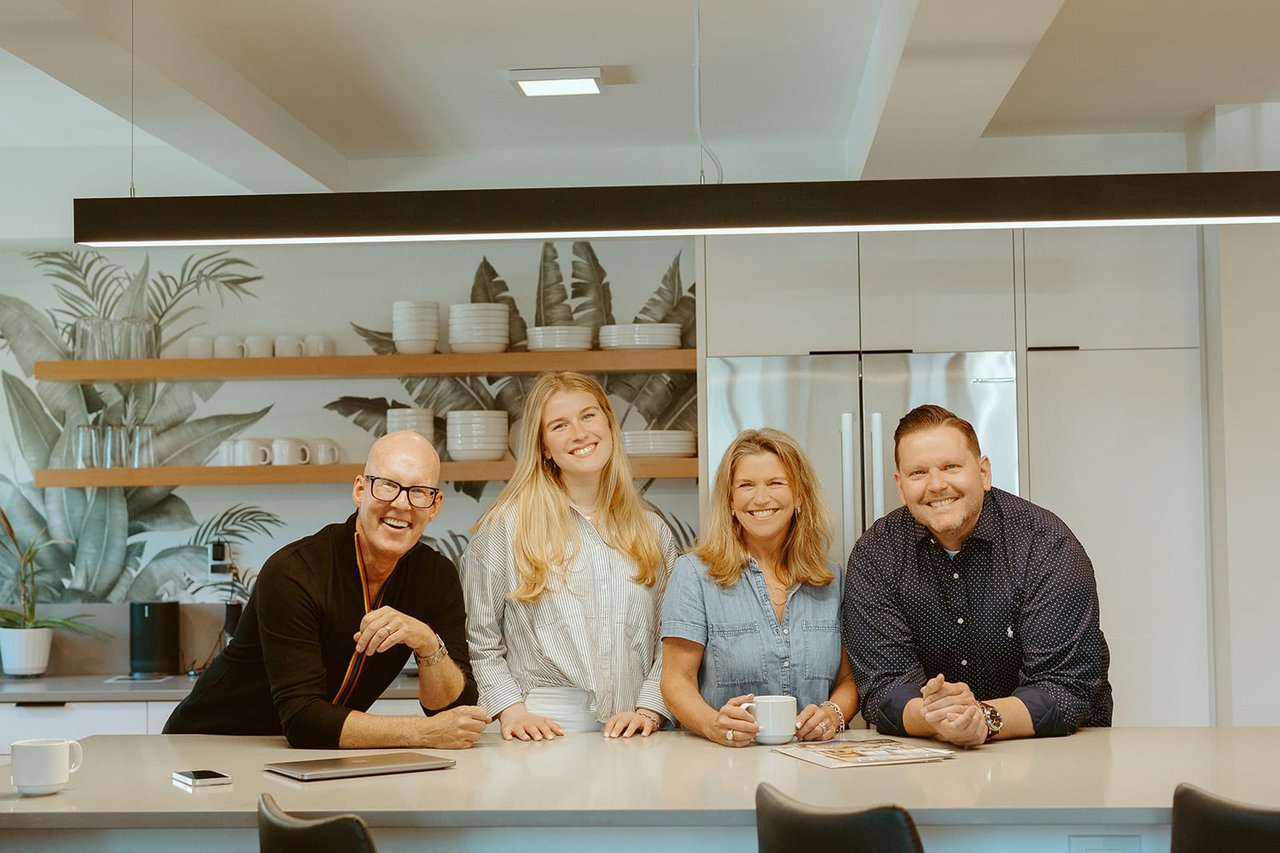
TeamUp Seattle has been successfully creating outstanding real estate experiences for our buyers and sellers in the Seattle area for 30 years. Our business is completely built around three guiding principles that motivate and drive us each and every day with each and every client.
Connect. Collaborate. Close.
Contact us today to find out how we can be of assistance to you!