Montlake Family Living in Seattle: Quiet, Connected
April 16, 2026
April 16, 2026
If you want a Seattle neighborhood that feels calm without feeling cut off, Montlake deserves a closer look. For many buyers, the challenge is finding a place that offers quieter residential streets, easy access to parks, and a practical connection to the rest of the city. Montlake stands out because it blends historic homes, everyday outdoor space, and strong regional access in one compact setting. Let’s dive in.
Montlake is a compact residential neighborhood just south of the Montlake Cut, bordered by destinations like the Washington Park Arboretum, Interlaken Park, and Portage Bay. According to HistoryLink’s neighborhood overview, the area is known for its primarily residential character, early-20th-century homes, and small commercial district.
That combination gives Montlake a distinct feel in Seattle. You get a neighborhood that feels central, but not overly dense, with mature greenery and a quieter day-to-day rhythm than many close-in areas.
One of Montlake’s biggest draws is how it balances peace and proximity. The neighborhood is mainly made up of single-family homes, and its scale feels more intimate than many other centrally located Seattle neighborhoods.
At the same time, you are not far from major destinations. Montlake sits near the University of Washington, SR 520, and key Seattle corridors, which helps explain why many buyers see it as a calm home base with big connections.
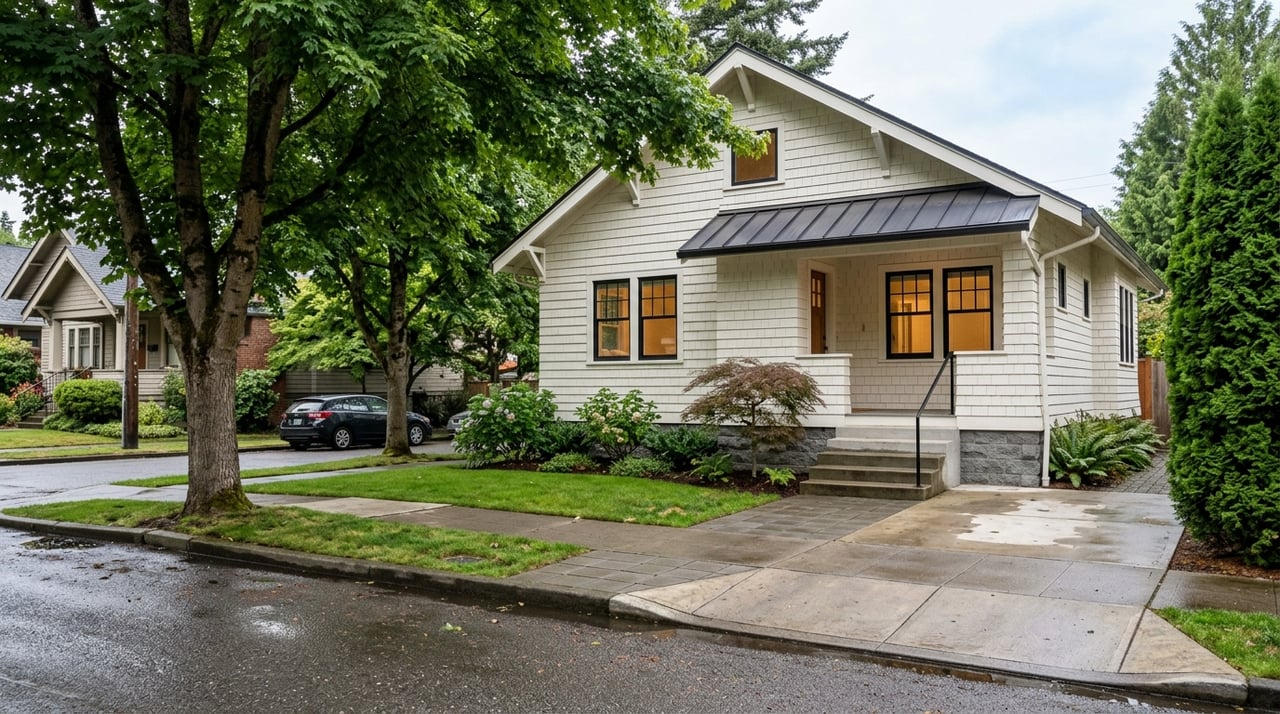
If you are drawn to older homes with architectural detail, Montlake has a lot to offer. Seattle historic-site records describe the neighborhood as a cohesive collection of residential architecture that developed largely between 1910 and 1940, with styles that include Craftsman, Colonial Revival, Tudor, Spanish Eclectic, and French Eclectic.
That means Montlake is better described as a character-home neighborhood than a place defined by new construction. The original lot layout, often around 60 by 100 feet, also helps create the compact, established residential pattern many buyers appreciate.
For households that want easy outdoor options close to home, Montlake is especially appealing. The neighborhood is closely tied to the Washington Park Arboretum, which spans 230 acres and offers a major green-space resource right next door.
The Arboretum’s shoreline and trail network connect toward Marsh and Foster Islands on Union Bay, giving you access to walking routes and water-oriented scenery without the neighborhood feeling heavily urban or commercial. This is a big part of Montlake’s lifestyle appeal.
Closer to the center of the neighborhood, Montlake Playfield adds practical recreation space for daily life. Seattle Parks notes that the playfield includes a children’s play area, sports fields, tennis courts, and access to the adjacent community center.
The Montlake Community Center offers youth and adult programs, indoor recreation areas, and even a pottery studio. Seattle Parks also lists preschool and after-school care there, which can be a helpful detail if you are planning around work and school schedules.
Montlake can also feel more open than you might expect for such a central location. West Montlake Park offers views over Portage Bay and the Montlake Cut, adding to the neighborhood’s sense of light and openness.
It is worth noting that East Montlake Park has been permanently closed since 2019 due to SR 520 work. So while the area still offers strong outdoor access, some historic waterfront connections are now shaped by construction and detours.
For buyers thinking long term, school access is often part of the equation. Seattle Public Schools assigns students by home address, and the district recommends using its school lookup tool and attendance-area maps to confirm current assignments.
Montlake Elementary is listed as an attendance-area school for parts of the neighborhood. The school reopened on its Montlake campus in fall 2025 after a major modernization project, and Seattle Public Schools highlights environmental science, arts, specialist instruction, and greenhouse education as part of the school experience.
That does not guarantee the same assignment for every address, and assignments can change over time. But it does give buyers useful context if you are looking for a neighborhood with nearby public school options and child-centered community resources.
Montlake is not a neighborhood built around a large retail core. That said, its small commercial strip along 24th Avenue E adds practical convenience for day-to-day living.
HistoryLink notes the presence of neighborhood-serving businesses such as coffee shops, a mini-market, and restaurants. For many buyers, that mix works well because you can handle quick errands or grab a casual stop nearby while still living in an area that feels mostly residential.
Montlake’s location is one of its strongest advantages, but it comes with some realities buyers should understand. The neighborhood is closely tied to the SR 520 corridor and the Montlake Bridge, which helps connect residents to Seattle, the University District, and the Eastside.
Regional transportation work is continuing to shape the area. According to project information referenced in the research, SR 520 improvements include transit access, bike and pedestrian connections, and a new lid and bridge infrastructure designed to improve movement through the corridor.
That is the upside. The tradeoff is that traffic, construction activity, and occasional trail or access disruptions are part of the current Montlake experience.
Montlake tends to work well if you want a quieter residential setting without giving up central access. It can be a strong option if your priorities include:
It may be less ideal if your top priority is a large business district, abundant nightlife, or a setting completely removed from traffic corridors. Montlake is better understood as calm and connected, not isolated.
If you are considering Montlake, it helps to look beyond the broad neighborhood reputation and focus on property-specific details. In an older-home area, condition, updates, layout, and lot use matter a lot.
You will also want to verify school assignment details by address, understand how current SR 520 and corridor work may affect access, and pay attention to how close a home sits to busier travel routes. These practical checks can make a big difference in how the neighborhood feels day to day.
In a neighborhood like Montlake, the details shape the experience. Two homes can both be in Montlake, but offer very different day-to-day living based on street location, lot orientation, proximity to parks, and access patterns.
That is where local context matters. If you are comparing Montlake with other Seattle neighborhoods, or trying to decide whether its mix of quiet streets and central access fits your goals, working with a team that understands Seattle block by block can help you move with more confidence.
If you are thinking about buying or selling in Montlake, TeamUp Seattle can help you evaluate the neighborhood, understand current market context, and build a plan that fits your timeline.
TeamUp Seattle has been successfully creating outstanding real estate experiences for our buyers and sellers in the Seattle area for 30 years. Our business is completely built around three guiding principles that motivate and drive us each and every day with each and every client.
Connect. Collaborate. Close.
Contact us today to find out how we can be of assistance to you!