Wallingford Rental and ADU Strategy for Buyers
May 21, 2026
May 21, 2026
If you want a Seattle neighborhood where house hacking can actually pencil out, Wallingford deserves a close look. You are balancing high home prices, tight inventory, and the need for flexible monthly income, so it helps to focus on an area with both strong rental demand and a mix of property types. In Wallingford, that mix of older homes, multifamily pockets, and corridor zoning creates real possibilities if you understand the rules. Let’s dive in.
Wallingford is a Seattle Residential Urban Village with a mixed zoning pattern that includes single-family areas, low-rise multifamily, high-density multifamily, and neighborhood commercial zones. City materials also describe Stone Way N as a neighborhood commercial corridor, with nearby transitions to townhouse, low-rise multifamily, and single-family blocks.
For you as a buyer or owner, that matters because the neighborhood is not one-note. Some properties may be better suited for an owner-occupied setup with one rental unit, while others near commercial corridors may offer more flexibility for small multifamily potential.
Wallingford also has housing stock that fits the house-hack conversation. Official records note early-1900s single-family and small multifamily structures, along with newer mid-rise mixed-use buildings along the corridor. Older homes, in particular, can create opportunities for basement suites, backyard cottages, or internal reconfiguration, as long as the work is legal and properly permitted.
The market is still tight. Zillow reported Wallingford’s average home value at about $1.10 million as of March 31, 2026, with 38 for-sale listings, while Realtor.com’s April 2026 summary showed 76 homes for sale.
That limited inventory means you may need to act quickly when a property with rental potential comes up. It also means that features like a separate lower level, alley access, or an existing legal accessory unit can carry real value.
On the rental side, Realtor.com reported 43 rental properties in Wallingford and a median rent of $3,800 in April 2026. That figure likely reflects a mix that includes larger homes and full-house rentals, not just apartments.
In practical terms, house hacking means living in one part of a property while renting out another part to offset your housing costs. In Wallingford, that can take several forms depending on the lot, the structure, and the zoning.
The most common setups include:
Seattle defines an ADU as a separate living space within a house or on the same property as an existing or proposed house. The city recognizes attached and detached ADUs, but an unpermitted basement or mother-in-law unit does not count as a legal dwelling unit.
That point is important. If you are buying a Wallingford home because the lower level appears rentable, you need to verify that it is legally established, not just physically present.
Seattle’s recent ADU updates have expanded what many property owners can do. City guidance says ADUs are broadly allowed across Neighborhood Residential, Lowrise, Midrise, Highrise, Neighborhood Commercial, Seattle Mixed, and downtown zones.
The city also says it allows two ADUs per lot. In many cases, parking, street-improvement, and Mandatory Housing Affordability contribution requirements generally do not apply to ADUs.
For buyers looking at Wallingford, that can improve the math on the right property. A lot that supports an attached or detached ADU may offer more options for future income, guest space, or multi-generational living.
Seattle’s middle-housing compliance work matters too. City materials say residential lots must now allow at least four units, and up to six units if the site is within a quarter-mile walking distance of a major transit stop or includes two affordable units.
Not every Wallingford property will be an ideal candidate for that kind of development. Still, the rule change is worth understanding if you are comparing lots, especially near stronger transit access or commercial corridors.
According to Seattle Department of Construction and Inspections guidance, many straightforward ADU applications can be processed in roughly 2 to 6 weeks. More complex sites and project scopes can take longer.
You should also be careful with any existing basement apartment or accessory unit that was built without permits. SDCI says a permit is required, and an unpermitted unit may have to stop renting if it cannot be legalized.
Wallingford rents tend to run above the Seattle average, especially for smaller units. RentCafe’s April 2026 data shows Wallingford averaging $2,362 per month, compared with $2,235 for Seattle overall.
Published unit-level ranges help paint a more useful picture. RentCafe reported studios around $1,570, one-bedrooms around $2,360, and two-bedrooms around $3,616. Apartments.com showed a similar pattern in May 2026, with studios around $1,518, one-bedrooms around $2,106, and two-bedrooms around $3,038.
Different platforms use different inventory samples, so the exact averages vary. The consistent takeaway is that Wallingford shows a premium for smaller units, with strong published price bands in the studio, one-bedroom, and two-bedroom categories.
Location supports demand. Wallingford sits directly west of the University of Washington, and UW says its Seattle campus serves more than 50,000 students across 700 acres.
The neighborhood also offers practical access to major job centers. South Lake Union remains a major employment hub, with long-established Amazon occupancy in the area and a Google Seattle office on Valley Street.
That does not guarantee rent for every property, of course. But it does support a reasonable case that Wallingford can attract renters looking for an in-city commute, including university affiliates, tech workers, and others who want access to central Seattle.
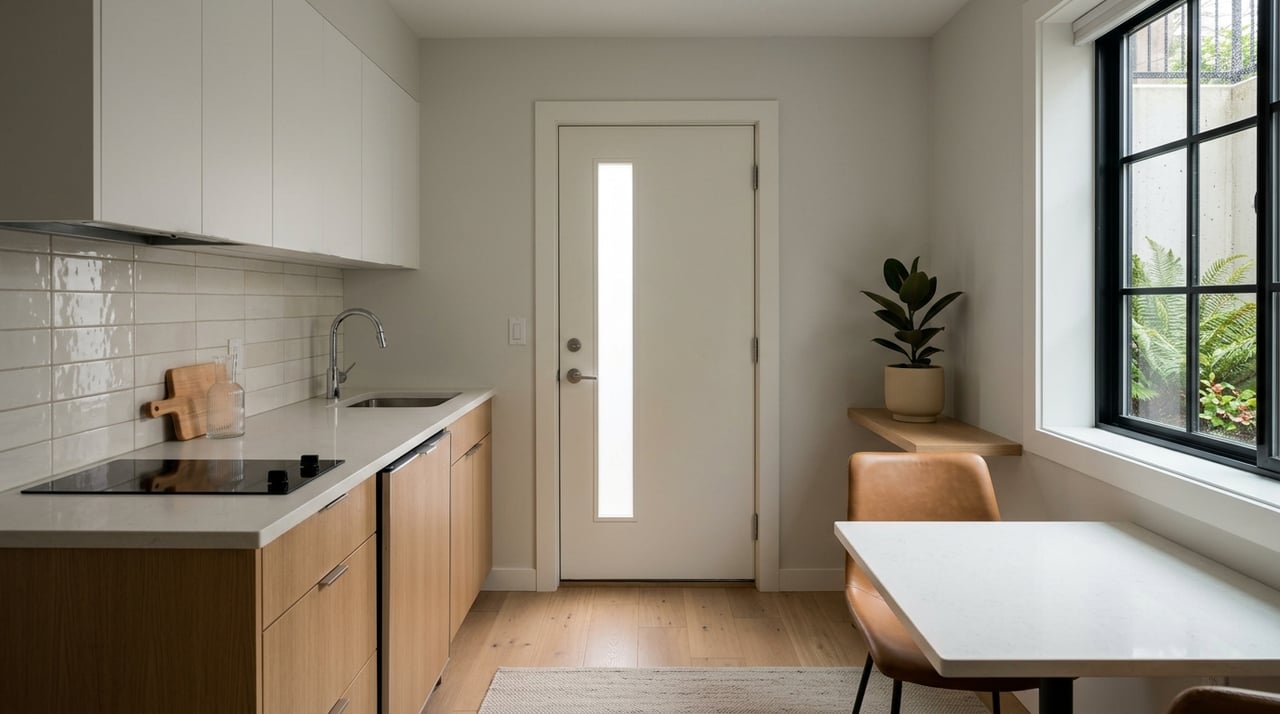
In Wallingford, some layouts are simply easier to rent and easier to live with as an owner. Based on the neighborhood’s rent bands, housing stock, and location, the most practical house-hack options are often legal studio or one-bedroom basement suites, compact DADUs, and smaller duplex or triplex units.
Older homes are especially relevant here. Because Wallingford includes many early-1900s single-family and small multifamily properties, you may find homes with lower levels, detached structures, or floor plans that lend themselves to a separate living area.
Corridor-adjacent parcels near Stone Way N can be stronger small-multifamily candidates. Interior residential blocks are often a better fit for owner-occupied house-hack setups rather than larger apartment-style redevelopment.
If your goal is rental income and day-to-day livability, the layout matters as much as the address. Features that line up well with Wallingford’s strongest rent segments include:
These details can make a unit easier to lease and more comfortable to manage while you live on-site.
Before you fall in love with a property based on potential income, slow down and check the basics. A smart review usually starts with legality, layout, and realistic rent expectations.
Here is a simple framework to use:
This is where local guidance can save you time and money. A property that looks promising online may have hidden permitting issues, while a less obvious listing may offer a much cleaner path to legal rental income.
If you are buying in Wallingford, the biggest opportunity is flexibility. The right property may help you reduce monthly carrying costs now while preserving future options for resale, guest use, or multigenerational living.
If you are selling, legal rental potential can be a meaningful part of your home’s story. A permitted ADU, a well-designed lower-level suite, or a layout that supports owner-occupied income can broaden buyer interest, especially in a neighborhood where purchase prices are high.
The key is presentation and documentation. Buyers tend to respond best when the space is clearly laid out, easy to understand, and supported by permits and practical use cases.
Wallingford can be a strong neighborhood for house hacking, but the details matter. If you want help evaluating a property’s rental potential, preparing a home for sale, or navigating the tradeoffs between location, layout, and long-term value, TeamUp Seattle can help you make a clear, informed plan.
TeamUp Seattle has been successfully creating outstanding real estate experiences for our buyers and sellers in the Seattle area for 30 years. Our business is completely built around three guiding principles that motivate and drive us each and every day with each and every client.
Connect. Collaborate. Close.
Contact us today to find out how we can be of assistance to you!