Buying Brick on Capitol Hill? Here's the Check Most Buyers Skip
September 17, 2026
September 17, 2026
Would you know if the building charming you into an offer has a file at Seattle's Department of Construction and Inspections flagging it as a collapse hazard?
Most buyers touring a walk-up on 15th Ave E or a converted apartment building near Volunteer Park never think to ask. The exposed brick, the tall windows, the century of character are the whole sales pitch. But on Capitol Hill, brick construction isn't just an aesthetic choice. It's a category the city tracks, insurers price, and lenders are starting to ask about even though nobody is required to fix anything yet.
That gap between what's legally required and what the market already expects is the thing worth understanding before you write an offer, not after your loan officer calls with questions.
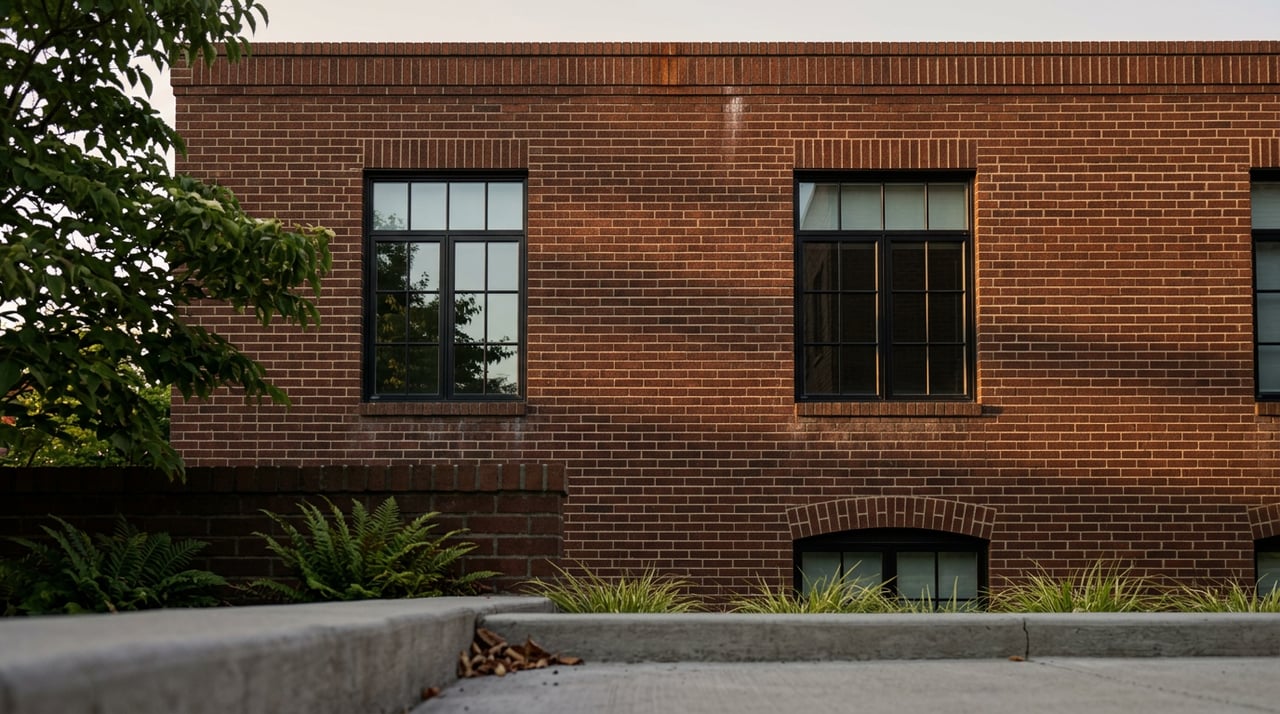
Seattle has identified more than 1,100 unreinforced masonry buildings, structures built mostly before 1945 with brick or stone load-bearing walls and no steel reinforcement tying them together. The city's own emergency management office notes that a tell-tale sign is what's called a header course, a row of bricks turned end-on rather than laid flat, visible if you know to look for it on the exterior.
These buildings cluster in exactly the neighborhoods buyers love for their character. The Seattle Office of Emergency Management specifically names Pioneer Square, the Chinatown-International District, Capitol Hill, Columbia City, and Ballard as the historic pockets where you'll find them. A 2022 analysis by Capitol Hill Seattle News counted 211 properties across Capitol Hill and the Central District on the city's confirmed unreinforced masonry list, with 49 of those classified critical or high risk. Only nine of those 49 had been retrofitted or substantially altered at the time of that count.
That's not a reason to avoid brick buildings. It's a reason to check the list before you fall for one.
Abstract risk categories don't mean much until you see a real project. The Whitworth Apartments at 1619 E. John St., one of the older brick buildings that gives Capitol Hill its historic texture, ended up as a useful case study. Rather than wait for a future city mandate, the building's owner moved ahead with a voluntary seismic retrofit, a project reported at the time to run $400,000 to $500,000. The scope was what engineers call a "bolts-plus" retrofit: bracing the building's parapet and anchoring the exterior masonry walls to the floors and roof so they move together in an earthquake instead of pulling apart.
That price tag landed on a building of a certain size and condition. Your building's number will differ. What matters for a buyer is understanding that retrofit costs are real, six figures is a normal starting point for a multi-unit building, and someone, whether a current owner, an HOA, or a future buyer, eventually pays for it.
A URM designation doesn't kill a deal. It changes which questions you ask before you write one.
Here's the part that catches buyers off guard. As of 2026, Seattle has no mandatory retrofit ordinance in force for unreinforced masonry buildings. The city adopted code in November 2024 recognizing voluntary retrofits under the 2021 Seattle Existing Building Code, which lets building owners get formal credit in the city's database for work they've already done. But nothing requires an owner to do that work. The city has drafted and redrafted mandatory proposals for years, and none have become law.
That sounds like good news for a buyer trying to avoid a surprise assessment. It partly is. But lenders and insurers aren't waiting for City Hall. Seismic risk analysts have noted that mortgage lenders and commercial insurers are increasingly requiring seismic evaluations on pre-1990 unreinforced masonry properties even without a legal mandate behind it. In practice, that means your financing or your insurance quote can already reflect a building's URM status well before the city forces anyone's hand.
The city has also published proposed compliance timelines for a future mandatory ordinance, which give you a useful vocabulary even though they aren't enforceable yet.
| Risk Category | Definition | Proposed Timeline Once a Mandate Passes |
|---|---|---|
| Critical | Emergency service facilities and schools | 7 years |
| High | Buildings over three stories in poor soil areas, or public assembly spaces over 100 occupants | 10 years |
| Medium | All other unreinforced masonry buildings | 13 years |
Nothing in that table is currently binding. But if you're evaluating a Capitol Hill building, knowing whether it would fall into the high-risk or medium-risk bucket tells you how exposed it might be once policy catches up with practice, and how insurers are likely already treating it in the meantime.
A few habits turn this from an abstract risk into a manageable part of due diligence.
None of this is abstract risk modeling. The 2001 Nisqually earthquake, a magnitude 6.8 event, caused roughly $2 billion in damages regionally, including more than $8 million in repair costs to unreinforced masonry buildings in Seattle alone. Two-thirds of the buildings the city determined unsafe after that quake were unreinforced masonry. The U.S. Geological Survey's modeling, cited by the city, puts Seattle's odds of a damaging earthquake at roughly 86 percent over the next 50 years.
That context isn't a reason to steer away from Capitol Hill's older buildings. It's a reason to treat a URM check the same way you'd treat a sewer scope or a well test elsewhere: routine, not optional, and far cheaper to do before closing than after.
Does a URM designation mean I can't get a mortgage? Not automatically. It means your lender may ask for a seismic evaluation as part of underwriting, which can add time to your financing timeline. Building that step into your schedule early avoids surprises near closing.
How do I know if a specific Capitol Hill building is on the list? SDCI maintains a public, address-searchable URM database. Checking it takes a few minutes and should happen before you write an offer, not after.
Does a retrofit already completed mean I'm in the clear? It means the building meets the city's current minimum retrofit standard, which SDCI is explicit is not the same as bringing the building fully up to new-construction code. Ask for the permit history so you know exactly what was done.
Will this affect resale value later? It can, in either direction. A documented, permitted retrofit is a selling point future buyers and their lenders will appreciate. An undocumented building on the list may prompt the same questions you're asking now, from the next buyer down the line.
If you're weighing a brick building on Capitol Hill against a newer condo elsewhere in the neighborhood, that's exactly the kind of comparison worth working through with someone who knows which questions to ask before you're three weeks into an inspection period. TeamUp Seattle helps buyers and sellers across Capitol Hill and the surrounding neighborhoods manage exactly this kind of due diligence, start to close. Reach out to schedule a consultation or request a free home valuation before your next showing.
TeamUp Seattle has been successfully creating outstanding real estate experiences for our buyers and sellers in the Seattle area for 30 years. Our business is completely built around three guiding principles that motivate and drive us each and every day with each and every client.
Connect. Collaborate. Close.
Contact us today to find out how we can be of assistance to you!